The RESIL-Card tool has been specifically designed for acute cardiovascular care settings. Unlike generic preparedness frameworks, it is firmly grounded in real-world cardiovascular care pathways and focuses on the operational realities hospitals face during times of crisis.
- Its objective is simple but critical: to help cardiovascular professionals proactively identify vulnerabilities, strengthen resilience, and safeguard continuity of lifesaving care for patients suffering from cardiovascular disease (CVD).
- It is expected to be used as a self-assessment exercise by hospital cardiovascular teams – cardiologists and cardiovascular specialists, nurses and allied health professionals – who will engage with patient representatives and other relevant stakeholders involved throughout the entire patient care pathway.
- It is intended for use at hospital level to assess a specific unit or department, a clinical pathway or the entire hospital, but its insights also inform primary care, post-procedural follow-up as well as regional and national health system preparedness strategies.
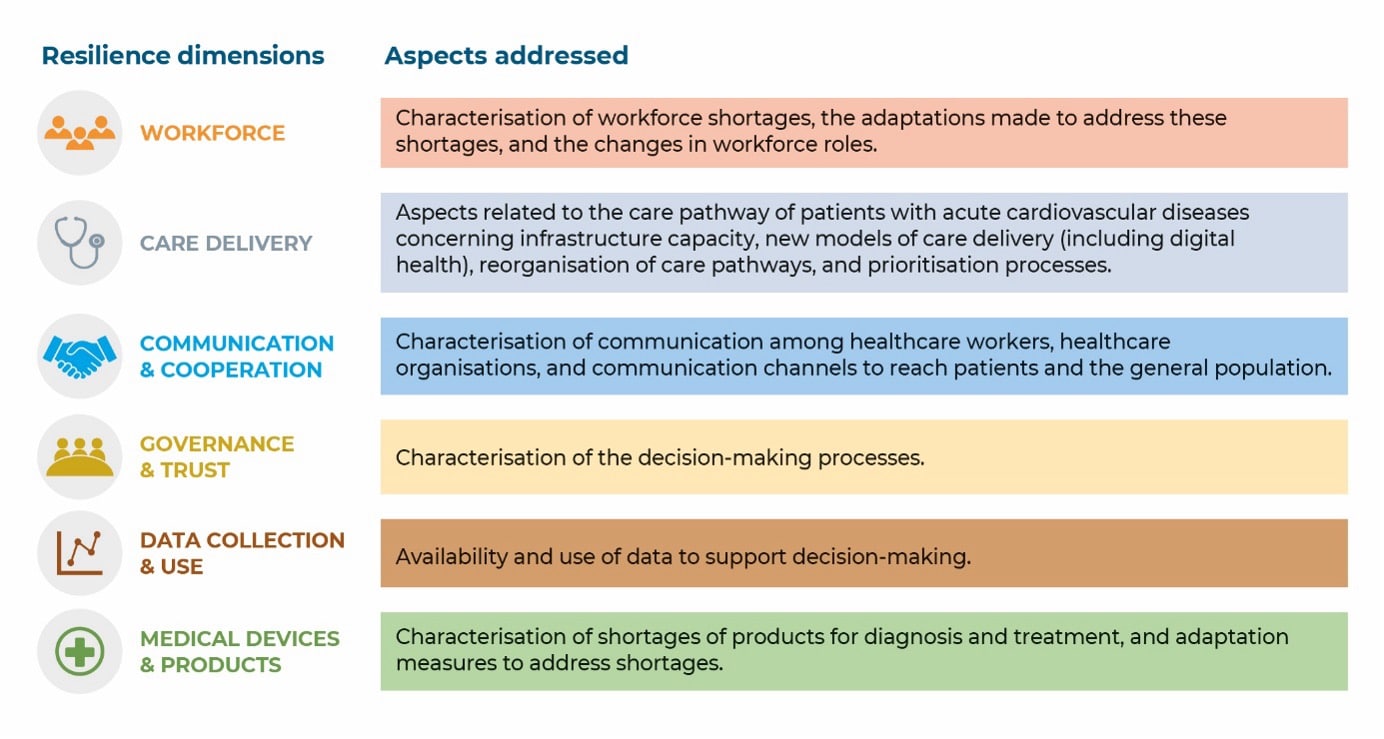
Drawing on international health system resilience research, the tool translates resilience theory into practical, cardiovascular-specific guidance and is structured around six key dimensions covering organisational, clinical, and system-level factors that shape care delivery under pressure.
Four steps toward resilience
The RESIL-Card tool methodology follows a structured and collaborative four-step process.
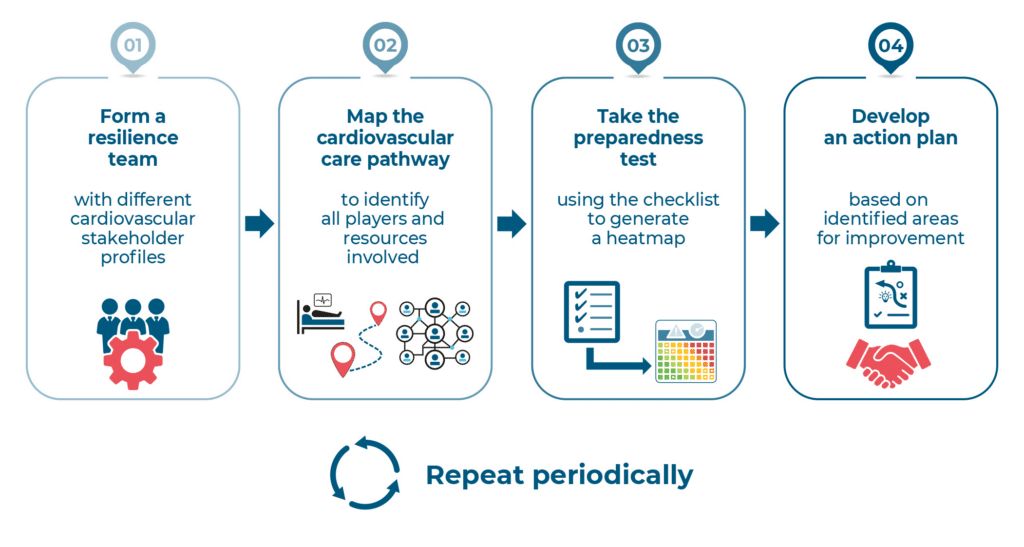
- Step 1 – Establish a multidisciplinary “Resilience Team”, including representatives of the care pathway stakeholders, ideally: interventional cardiologist, nurse, allied healthcare professional, emergency medicine specialist, service and hospital manager, referring doctor – whether GP or specialist – and patient representative.
This composition mirrors the key members of the local care pathway and ensures diverse perspectives and shared ownership of the process.
- Step 2 – Map the local cardiovascular care pathway, using “building blocks” and listing stakeholders involved throughout the care pathway.
This step provides a clear picture of how care is organised and where pressure points may arise during crises.
- Step 3 – Complete the RESIL-Card preparedness checklist
The team completes a structured preparedness checklist organised across the six resilience dimensions. The purpose is not to score or rank hospitals but to stimulate structured reflection on:- Existing strengths
- Structural vulnerabilities
- Operational risks
- Gaps in coordination
- The output is a visual heatmap, highlighting critical areas for improvement and helping teams prioritise action.
- Step 4 – Develop targeted improvement actions
To support implementation, RESIL-Card will provide a practical toolkit containing evidence-based recommendations, relevant literature, examples of good practice, and useful applications and tools, based on the prior experience shared by users of the tool.
This enables teams to design feasible, targeted improvement actions that optimise existing resources.
The tool is dynamic and iterative. The assessment can be repeated over time to monitor progress and adapt strategies as circumstances evolve.
RESIL-Card turns the concept of resilience into a structured, operational process tailored to cardiovascular care.
By combining evidence, multidisciplinary collaboration, and practical guidance, it empowers hospitals and health systems to move from reactive crisis management to proactive preparedness.
In doing so, it contributes to what matters most: ensuring that patients living with cardiovascular disease receive reliable, continuous care, even in times of disruption.
